



Digital Property Information Protocol
Helping the property industry share information earlier to reduce delays and fall-throughs, making land and property transactions faster, clearer and more certain for buyers and sellers.
The aim of the Digital Property Market Protocol (DPIP) is to enable the property industry to collaborate to provide the most efficient process to consumers who are buying or selling land and property. The sharing of data earlier in the process, even in a non-digital format, will avoid duplication and provide improvements to the current process. As digital data becomes increasingly available, and as standards and schemas are agreed in line with the Government’s home buying and selling reform roadmap, the process will become more digitally enabled and efficient.
This protocol is for buyers, sellers and property professionals. The processes described aim to deliver efficiency but should not be considered a home-moving ‘checklist’ as each transaction and client is different.
The DPIP is intended to help all stakeholders in the transaction understand what role they can play in providing transparency and certainty to the process more quickly to reduce timescales and transaction fall throughs.
The Protocol will be updated as new digital technology becomes available and will be reviewed regularly.
Data use in the current process
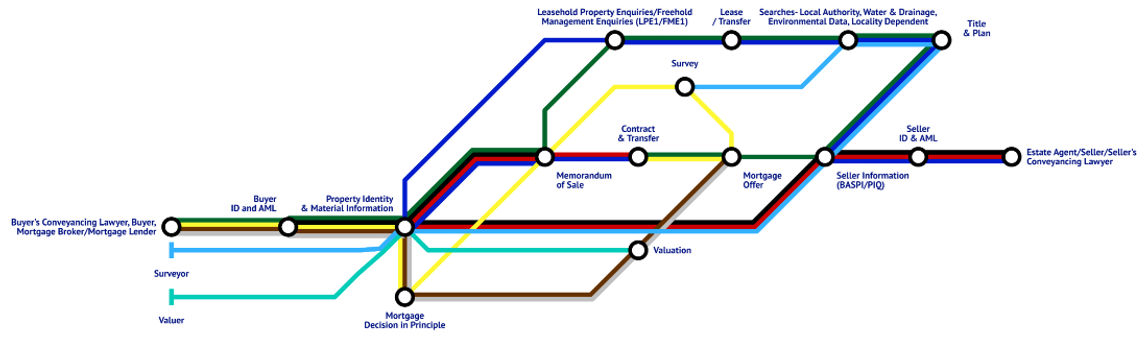
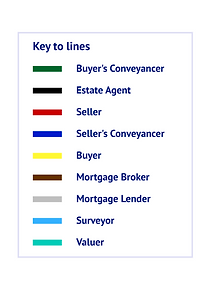
As this map shows, data consumption in the property sector is complex. The ‘tube lines’ represent each of the key stakeholders in the process and the ‘tube stations’ are the datasets which they need to interact with to perform their role.
Gathering Material Information as early as possible will make the whole process far more efficient.
A full list of what data is required by different sectors of the property transaction process can be found in the link below.
The Protocol
The protocol sets out who is responsible for each activity in the buying and selling process, helping ensure the right professional is involved at the right stage and that consumers (buyers and sellers) know which expert to consult for advice.
The graphic below shows the key stages in the home buying and selling process and who is involved at that point. Visit the individual sector pages under the DPIP for more information.

Implementing the protocol will enable stakeholders to collaborate more effectively, have defined responsibilities to avoid duplication, share the required data and information as efficiently as possible and ensure a smoother customer journey.
You can also read this detailed booklet on the overall Protocol, which is from the Conveyancing lawyers perspective.
Click on the boxes below to find out how each sector will use and be supported by the Protocol.
For property professionals
For the consumer - buyers and sellers
The protocol supports the sale and purchase of a property by helping buyers, sellers and their advisers share information earlier and work more efficiently together. It is not intended to be a moving checklist, as every transaction is different, but it aims to help consumers understand how they can support the process, reduce delays and fall-throughs, avoid wasted cost and frustration, and reach legal commitment more quickly.
Buyers
The DPIP gives buyers access to trusted, standardised property information upfront, from the condition of the home to leasehold costs and flood risk, so they can make an informed choice about which property to pursue and which specialists to instruct, without nasty surprises derailing the process months down the line.
Sellers
By using the DPIP to share verified property information digitally from the start, sellers can demonstrate transparency to potential buyers, reduce the risk of their sale falling through, and benefit from a faster transaction with less back-and-forth, making the whole experience simpler and far less stressful.
Finance & Protection
Consumers can explore the financial products relevant to buying a home, including mortgages, insurance and protection, and learn how they can help safeguard you.
Coming Soon
Future areas that will be included in the DPIP include:
-
Builders and developers
-
Technology providers
-
Consumers – more detailed information for buyers and sellers depending on their circumstances, including first time buyers, downsizing and those selling on behalf of someone who has died
-
Tax advisers
Follow us on LinkedIn to be the first to know when new pages launch!
Contact us for more information on upcoming pages or to suggest additional topics for future pages.